29 Copywriting Portfolio Examples & How to Build Yours in 2026

In the past 6 years, we’ve seen thousands of copywriting portfolios (no, really) and talked to hundreds of copywriters. That taught us how to spot outstanding portfolios that’ll get you hired, so we collected 29 of them to help you get inspired when you build yours.
In this post, we’ll show you 29 real copywriting portfolio examples to give you a good idea of what they usually look like. Through these examples, you’ll learn what makes a copywriter portfolio great, and in the end, we’ll show you how to build one using a copywriting portfolio builder tool.
Use the table of contents on the side to skip ahead to the portfolio guide if you’d like.
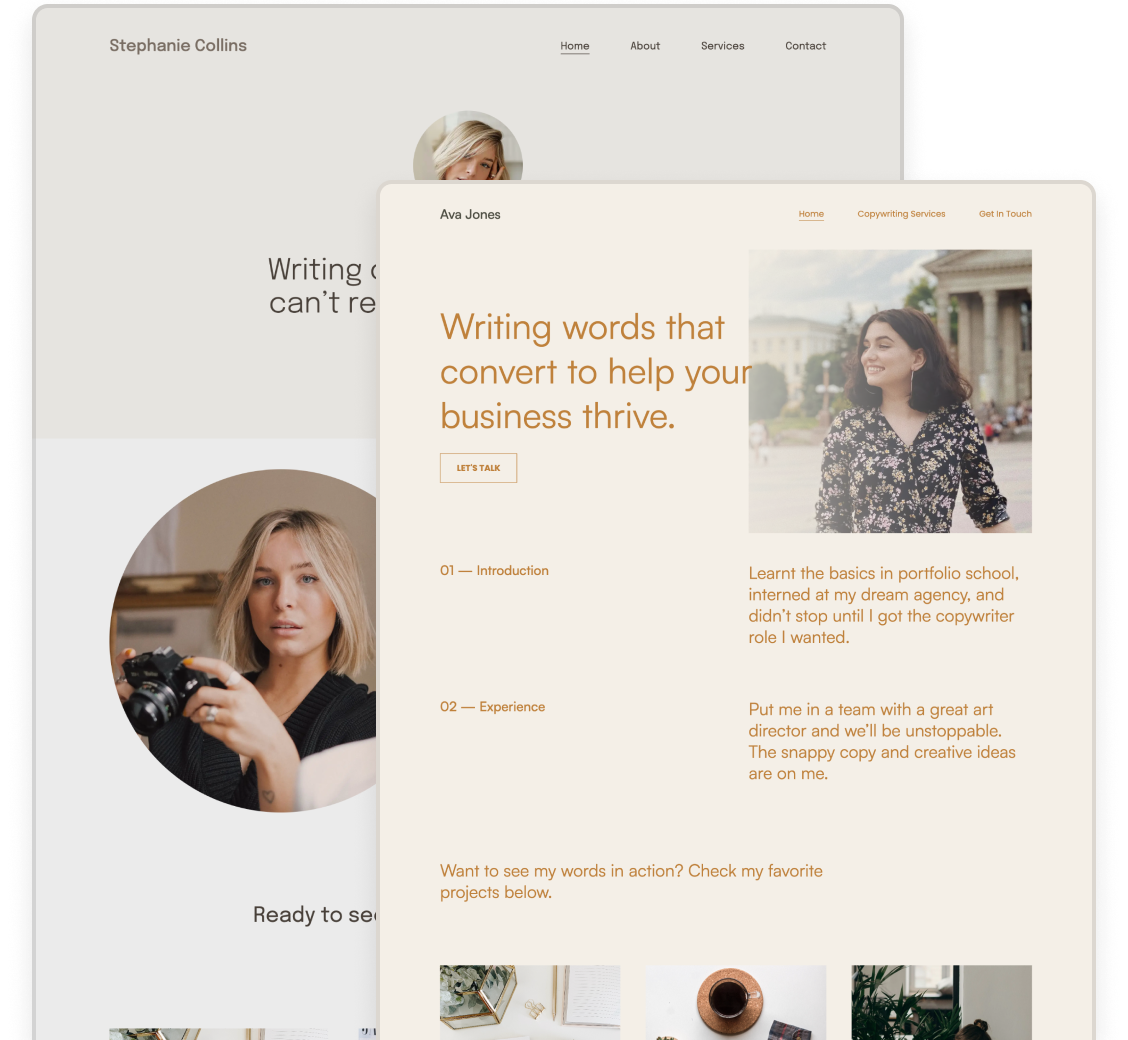
Prefer a video format? Check 7 new examples below 👇
Copywriting portfolio examples
Even if you know what you should include in your portfolio, it’s helpful to see how other people have done it. That’s why we’re bringing you 29 real copywriting portfolio examples today that we hand-selected from hundreds that we looked through. You can get some inspiration for yours and also learn from them.
Examples of a good copywriter portfolio home page
1. Susanna T.

Portfolio type: freelance copywriter
Made with: Copyfolio’s Premier template
Checks these boxes:
- Tagline with profession + areas of expertise
- Projects broken up by format
- Logo wall + resume strengthening credibility
Steal this: memorable personal brand with fun, unique graphics (hello unique selling point)
Skip this: it’s a lot to scroll through, keep your pages shorter, break your content up into multiple pages if you have a lot to add

2. K.J. Brett

Portfolio type: content & copywriter
Made with: Copyfolio’s Poster template
Checks these boxes:
- Clear positioning
- Projects showcased front and center
- Testimonials help build credibility
Steal this: use big, bold text to draw viewers’ attention
Skip this: add more info about yourself. Businesses want to work with a person, not a mysterious entity.
3. Kelsey O’Halloran

Portfolio type: human-centered copywriting studio
Made with: Squarespace
Checks these boxes:
- Builds rapport with a photo & welcoming copywriting
- Makes it clear she’s a freelancer, pointing to her services
- Features top projects on her homepage too
Steal this: treat your homepage as a sales page, and write it accordingly
Skip this: don’t bury your projects so low on your homepage. They play a big role in ultimately converting visitors into clients.

4. Alyssa Birchfield

Portfolio type: content strategist & copywriter
Made with: Copyfolio’s Artboard template
Checks these boxes:
- Puts the projects front and centre, making them easy to find
- The CV at-glance shows her background in a skimmable way
- Has a clear CTA, so people can reach out easily
Steal this: categorize your copywriting samples if you cover many formats or niches
Skip this: text and images are a little bit unbalanced on this homepage. Go through yours when it’s done, and shuffle things around if needed.
5. Zoe Gekas

Portfolio type: multilingual copywriter
Made with: Copyfolio’s Frame template
Checks these boxes:
- Makes profession and target audience crystal clear
- Showcases 3 top projects (perfect number!) on the homepage too
- Skimmable design, just enough text to convey essential info without being overwhelming
Steal this: align the look of your portfolio to what your target audience would like: in this case elegant colors and serif fonts for the targeted luxury brands.
Skip this: CTAs are crucial, so don’t just stop at a ‘Want to work together? I do” combo.
6. Elsa Fernandes

Portfolio type: strategic copywriter
Made with: Copyfolio’s Journal template
Checks these boxes:
- Clean and super professional layout
- Makes her niche (B2B) clear with copywriting
- Creates intrigue on the homepage and leads to other, dedicated pages with buttons
Steal this: use a varying layout (aka different sections), buttons, and images to make your page skimmable and easy-to-read
Skip this: a monochrome, black-and-white color palette is clear, but can be a little bit boring. Experiment with an accent color if you feel like your page could use one.
7. Kathryn from CopyKat

Portfolio type: senior copywriter / copy lead
Made with: Showit
Checks these boxes:
- Eye-catching design and a unique tone of voice
- Big, well-known brands in the logo wall
- A creative way (wow, word clouds can be done well) to showcase her fave type of projects
Steal this: reading her landing page copy is a delight, which is a great sign on a copywriting portfolio homepage. So remember: whatever you write on your page will become a part of your portfolio showcase
Skip this: while the copy is delightful, there’s a lot to read, and people might not have the attention spam for that these days.

8. Andrea Nazarian

Portfolio type: multilingual copywriter
Made with: Copyfolio’s Premier template
Checks these boxes:
- Profession and credentials are clear from the get-go
- Embedded copywriter resumé gives insights into her background
- Points to other pages with buttons
Steal this: a punchy accent color and a well-chosen picture on the homepage might be enough to grab visitors’ attention and keep them reading
Skip this: if you decide not to showcase any copywriting projects on your homepage, consider other elements like brand logos that can give you some credibility
9. Sara Henry

Portfolio type: in-house creative copywriter
Made with: Copyfolio’s Premier template
Checks these boxes:
- An about me section so you can get to know her a little better
- Four of her top projects so you can see her copywriting skills in action
- And a call to action, prompting you to get in touch
Steal this: don’t be afraid to use feminine elements (like a little heart or a pastel color palette) in your copywriting portfolio if that’s what’s authentic to you and your brand
Skip this: if you’re aiming for a new in-house position, link to your CV (on a separate page or even PDF) somewhere from your homepage.

10. Alaina Thomas

Portfolio type: copywriter & social media manager
Made with: Copyfolio’s Journal template
Checks these boxes:
- Tagline and highlighted services make her areas of expertise clear
- The short intro and photograph build a personal connection
- Work samples are easy to find on the page
Steal this: using custom graphics all throughout the page like Alaina did can make for a very memorable personal brand and copywriting portfolio
Skip this: two project pages might be too few, consider adding at least a third if you don’t have a separate portfolio page with more copywriting samples
With the right alt-text, people with disability and search engines will still be able to read it, even if the text is added as an image
11. Carly Zumar

Portfolio type: copywriter & social media strategist
Made with: Copyfolio’s Letterpress template
Checks these boxes:
- Friendly and straightforward intro in the tagline
- Projects are easy to find right underneath
- Project titles include both the brand name and the format
Steal this: harmonize the style of your project thumbnails if you add them to your homepage for a cohesive page design
Skip this: jumping straight into the projects can be beneficial, but a little more context on the homepage would be welcome
Are you also a copywriter working lots on social media projects? Check some social media portfolio examples too for some extra inspo.
12. Emma Dodds, NYC-based copywriter

Portfolio type: fashion copywriter
Made with: Copyfolio’s Typewriter template
Checks these boxes:
- Profession & location clearly in the tagline
- 6 projects: a great number that can showcase a lot without being overwhelming
- A call-to-action to convert
Steal this: making most of your site monochrome (including photos) and only using color in a certain area can really draw people’s eyes exactly where you want them
Skip this: the black-and-white New York picture helps set the vibe, but considering its size we wonder if that online real estate could have been used better.
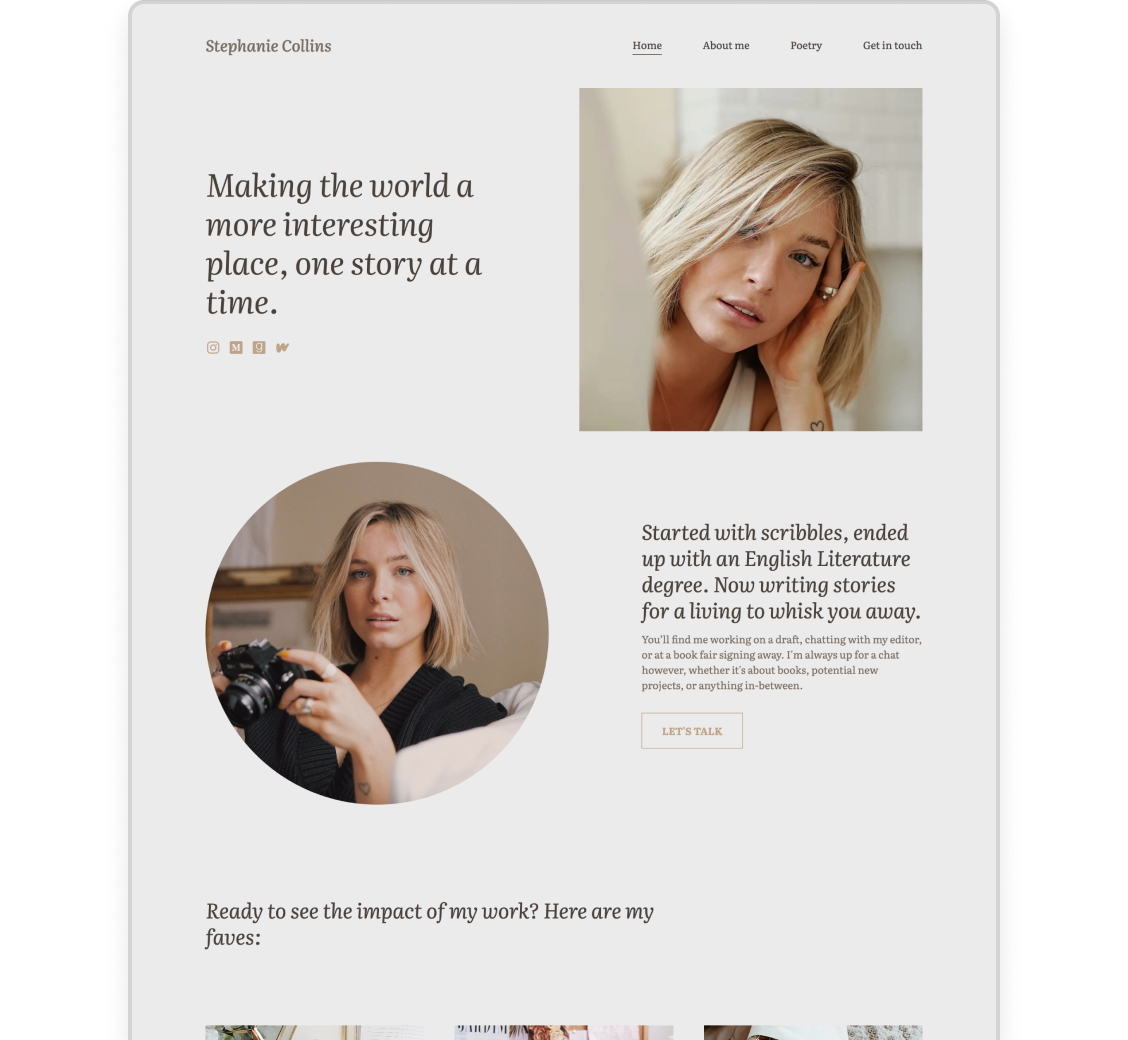
13. Cassidy Horton

Portfolio type: freelance finance copywriter
Made with: Squarespace
Checks these boxes:
- Not just describing but calling out her target audience (really doubles down on it)
- Writing the home page copy as if it were a sales page (which it kind of is)
- Breaking up the page with lots of images and big headings
Steal this: think of your portfolio homepage as your businesses homepage, and write it with converting potential clients or future employers in mind
Skip this: as this is more of a freelance writer website than a regular copywriting portfolio, the focus is not really on the portfolio itself. So if you want to actually showcase your writing, make sure to place your samples in a more prominent place
14. Xon Baker

Portfolio type: strategic copywriter
Made with: Copyfolio’s Billboard template
Checks these boxes:
- Leads with the benefit clients working with them will have
- Consistent design with the fully monochrome color palette
- Highlighting 5+ years of experience in the introduction section
Steal this: if your thumbnail images don’t look cohesive, consider adding a filer and/or border to them, so they match better
Skip this: even though the color scheme and the frames help, using document screenshots as project thumbnails is still not aesthetic or ideal. Instead, just write the project title on a plain background that matches your site.
15. Tom Rigby

Portfolio type: freelance copywriter
Made with: Wordpress
Checks these boxes:
- Tagline highlights profession, seniority, and being a freelancer
- Intro section with professional-but-friendly headshot builds rapport
- What I write section perfectly collects possible output options
Steal this: it’s not pictured, but Tom has lots of household name brands as clients featured on his homepage, which is amazing for authority
Skip this: only the top navigation leads to the actual freelancer portfolio. If you don’t feature any of your samples right on the homepage, try to at least add an extra button to lead people there
16. Gari Cruze

Portfolio type: agency copywriter
Made with: Squarespace
Checks these boxes:
- Vibrant and eye-catching project thumbnails
- Simple, straightforward name+profession combo at the top
- Top navigation hinting at more personal details
Steal this: if your homepage is very project-focused as Gari Cruze’s is, make sure to add other details that hint at your personality, like the “17 random things” page here
Skip this: if all you have on your homepage is images with titles appearing on hover, make sure it’s still somehow accessible for people with screen readers
What should good “about me” pages look like?
We’ve talked a good amount about the ideal copywriter portfolio home page, let’s now look at what an ideal about me page should look like.
17. Alaina Thomas

What we love about this about page:
- The list of personal fun facts are a nice touch
- Her copywriter resume is easy to skim
- The CTA at the end if great for conversions
What could be improved: we’re missing more info on her professional background
18. Ashlyn Carter from Ashlyn Writes

What we love about this about page:
- Showcases both Ashlyn’s copywriting skills and her brand
- Is essentially a sales page too that talks to potential clients (smart)
- The personal touches soften the sales aspect
What could be improved: while fun, it’s very long for an about page, so it’s easy to get distracted and click away

19. Colleen Welsch from Glossy Type

What we love about this about page:
- The cool, bright colors that make the page unforgettable
- Having both a short and a longer version
- That there’s a call-to-action at the end
What could be improved: using I and we are mixed on the page, which makes the copywriting a little bit inconsistent. Plus, the middle of the page is very text-heavy and kind of hard to read, so a little formatting or design magic would go a long way.
If you have a lot of text to showcase, use images, line breaks, and white space to break it up. It won't feel as overwhelming and people will be more likely to read what you wrote.
20. Sly Samudre

What we love about this about page:
- All the information is conveniently broken up into different sections
- The use of a logo wall for added credibility
- The CTAs so people would actually get in touch
What could be improved: the image in the last section is a little bit out of place, both content and style-wise, so we’d change that to something more relevant. And maybe add a CV or something to show more of Sly’s professional background.
With Copyfolio’s unified color logo wall section, the logos are turned monochrome, matching the color scheme of his portfolio website. The result? A professional presentation.
21. Elysse Bell

What we love about this about page:
- She starts with a short-and-personal section, which helps build a connection
- The CV itself is extensive yet easy to skim
- The headshot is friendly yet professional
What could be improved: well, as its title also shows, this page is more of a CV than an about page, but still, elaborating a bit more would have been nice, given that it’s in a copywriter’s portfolio
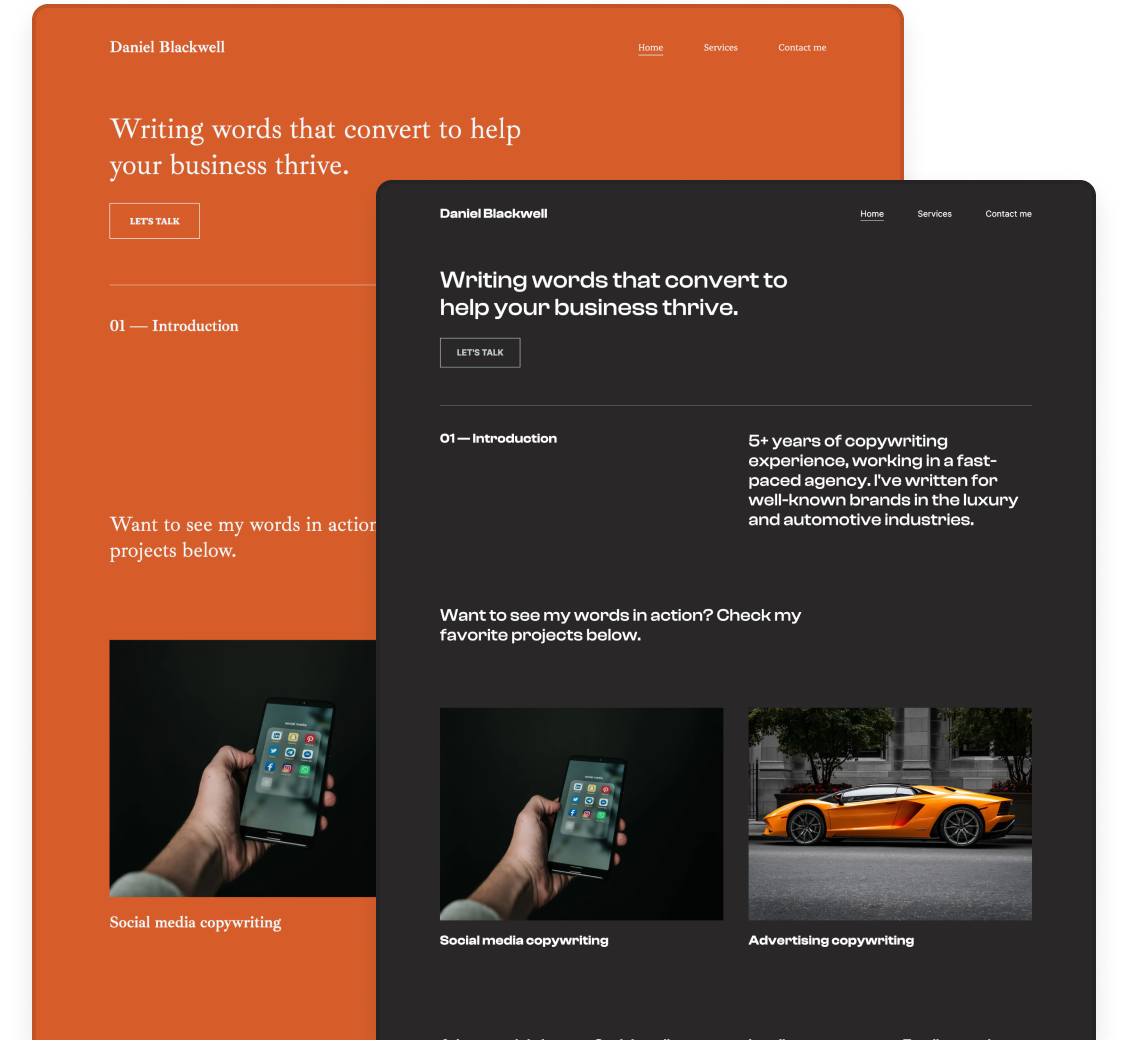
Examples of the actual portfolio pages
22. Grace Nighswonger

The highlights of Grace’s copywriting portfolio for us are:
- The monochrome, minimalistic thumbnails, using short titles instead of images
- Having short descriptions under the project titles
- Being upfront about being in the learning stage
24. The Literary Co

The highlights of The Literary Co’s portfolio for us are:
- Having a video featured on the page (though we might have moved it lower)
- The list-like project showcase with the image, brand, industry, and project type
- How it's threading the fine line between personal branding and business branding, with how professional it all looks, while it's clearly run by the founder, Kayla.
The ideal case study in a copywriter portfolio
24. Olivia Tinsley

What we love about this copywriting case study:
- The layout of text and visuals makes the page engaging
- The videos themselves are also really fun and creative
- It’s clear what Olivia’s role was in this project
What could be improved:
- Would love to know what happened to the concept and campaign
- A mention of the people Olivia collaborated with would be nice
25. Leanna Crawley

What we love about this copywriting case study:
- How Leanna broke down the challenge into brief, audience, and insights
- The bullet list in the “What I created section” makes it really easy to see her output
- Showcasing the end results in so many different formats make the case study really engaging
What could be improved:
- We’re missing numbers showing the performance: views and engagement for the social media videos, open and click-through rates for the emails
- A call-to-action would make this page even stronger
26. Sara Frandina

What we love about this copywriting case study:
- Describing the work based on the challenge and the solution
- Breaking down the deliverables
- Showing the results AND a testimonial (10/10, honestly)
What could be improved:
- The testimonial Sara picked is pretty long and looks a bit overwhelming at first glance
You should always expect the content to be taken off the site, no matter how unlikely it seems now. The client could go out of business or just take the piece down for whatever reason. How are you going to showcase your copy then?
So make sure you always take a screenshot to prove it was online and show it in context.
Ready to advance in your copywriting career? Take a look at how to create your first creative director portfolio!
27. Jeff Seymour

What we love about this copywriting case study:
- We get info on the project itself and the creative process
- Seeing the finished copywriting on the final visuals
What could be improved:
- The project title is a little bit generic
- Would be nice to see results (for email marketing, we’d expect things like open rates and click-through rates)
Showcasing numbers for these is always a powerful piece of proof of your copywriting skills and expertise.
28. Julia Polaniecki

What we love about this copywriting case study:
- It’s very comprehensive
- Illustrates each section with visuals
- Ends with a call to action
What could be improved:
- Having different types of text on the visuals makes the overall design less cohesive
- Font sizes and alignments are also a little bit all over the place
29. Joe Penn

What we love about this copywriting case study:
- Short and sweet, offering just as much information as you need
- The thumbnail of the video pops against the black background
What could be improved:
- Would love to see more info on the result and how it performed
- Similarly, since this was made in a team, we’d want to know more about Joe’s role specifically
Even though it’s copywriting, the end result is not always text-based, like in this case. So it’s important to choose a portfolio builder like Copyfolio that makes showcasing any sample format easy.
Tips for creating your own copywriter portfolio
You’ve seen the examples, and now it’s time to learn how to do it yourself. We’ll outline the must-have characteristics of a truly great copywriting portfolio and go over what you should include. Also need a tool that’ll make building fun and easy? We have one you’ll love at the end.
When you think about what makes a copywriting portfolio good, think about the person who’s going to be reviewing yours. It will either be a hiring manager or a potential client of yours, right? Or even a senior copywriter if you're applying for a copywriting internship.
Well, they probably won’t have hours to look through your work, and they’re looking to find out all the essential information about you as quickly as possible.
Your name, short bio, contact information, and even your social links should be easily accessible, so they can quickly get an idea of who you are and where to find you. And in case they want to know more about your background, you should consider attaching or showcasing your resume as well.
To stand out from the dozens of portfolios they might be looking through, yours needs to be visually appealing. If your content is outstanding but the presentation is boring and the page too text-heavy, they won’t bother reading it. They’ll close the tab and skip to the next one.
But how do you make your portfolio appealing and easy on the eyes?
- Use images, white space, and headings to break up the text
- Choose images that are consistent in style and color
- Make sure all images are high-quality
- Keep font sizes and all formatting consistent
And don’t forget: your home page and thumbnails keep the visitors there long enough to keep looking. But it’s the projects themselves that determine whether they want to hire you or not.
So make sure you only include your very best work, and present each case study in a clear, easy-to-understand way. Any copywriting examples that don’t hit your highest standards, should be left out of your portfolio.
Now that you know the guidelines to make the overall portfolio up to snuff, comes the question: “But what should a copywriting portfolio include?” Your absolute best copywriting examples, of course.
You should select projects that you are proud of, ideally covering a range of different formats. They could be TV commercials, radio spots, digital ads, landing pages, email marketing copies, print advertisements… The list is endless.
You don’t have to include everything, but it’s nice to show that you have a versatile copywriting skillset. If you had the chance to work with some big brands throughout your writing career, make sure to display their logos as well.
When writing about each project, think about them as very brief case studies. Make sure you clearly and briefly explain:
- the background of the project and the problem you had to solve,
- your task and problem-solving process,
- the solution or finished result,
- and if possible, the impact it had.
You won’t always be able to measure the impact of your work, but if you can, you always should include it in the project. It’s powerful proof that the copy you write, really does convert.
The ideal copywriting portfolio layout and structure
An important aspect of a successful copywriting portfolio is its overall layout and structure. It should have:
- A home page,
- About me page,
- Contact page or section,
- Pages detailing each project,
- A services page for freelance copywriters, and
- Testimonials.
The portfolio home page
The home page is where all your visitors land and get their first impressions, so it’s important to make it not only visually appealing but also easy to navigate. Your home page should have:
- Your basic info. It’s good to add a photo of yourself and a short bio, so visitors can quickly get an idea of who you are and what you do.
- Social links. They might want to check you out on other platforms if your site got them interested. Why not make it easier and include icons that link to your profiles?
- Your top projects. Even if you don’t feature all of your projects on your home page, we recommend you to add at least 3-4 of them. If you have more than that to share, the rest can go on a dedicated portfolio page.
- Brands you worked with. If you had the chance to work with some big names in your writing career, feature their logos on your portfolio home page. It shows authority and credibility to the viewers. After all, if those companies decided to work with you, why shouldn’t they?
A recent research study analyzing the top 1% of copywriting portfolios found that 48.5% of portfolio visitors navigate straight to the first project showcased on a portfolio homepage.
So put your best foot forward and showcase 2-3 of your best projects on your homepage, putting the very best one first.

A contact page or section
Another non-negotiable is the contact page. You might have wowed a potential client with your work, getting them excited to start working with you. But with no contact information? No matter how much they like your work, you just lost them right there.
So make sure to include a contact page or section—or at least your email address in the footer of your portfolio. Make it easy to find and reach out, so you never lose a job for a reason like this again.
Your about me page
Once you have these two set up, don’t forget about your about me page either.
Even if you have a photo and short bio on your home page (which you should!), it’s good to have a separate page with more details.
It’s a perfect place to show your personality and give them a glimpse into who’s behind all of this amazing work they see on the site. And if you’d like to properly feature your CV, your about me page is a great spot to do so.
Don’t worry, just because it’s a separate page, it doesn’t need to be long. Even just a single image + text section can do wonders, looking way more professional than a novel-length intro on your homepage would.
Projects and case studies
The home page helps visitors decide whether to stay to see more of your work. But it's the projects or case studies themselves, which will determine if they want to actually work with you.
You have to make sure that each project
- clearly and briefly outlines the business goals, your process, and approach
- is visually appealing with images, videos, or both
- gives credit where credit is due (to developers, designers, art directors you worked with)
The aim of including the projects in your copywriting portfolio is to show the finished results for each, preferably in context, and also how it solved a business problem. People also like to see your reasoning and thought process behind it.
But keep in mind that they won’t have hours to read through pages and pages of details.
It can be a struggle for experienced copywriters with years of experience to choose which samples to add to their copywriting portfolio. A lot of thought goes into picking the right projects even for a creative director portfolio. If you’re facing this problem, think of the following when selecting your projects:
- The viewers have limited time. This means you should limit the number of projects you include, and only choose the very best ones.
- Do you have a niche or are you a versatile writer? If there are multiple areas you can and like to write in, make sure to include a nice variety of topics to prove that. But if you are specialized in one niche, visitors should be able to see that at first glance too.
- Have any of your projects won awards? In the advertising and copywriting world, awards mean a lot. So if any of your projects won awards, you should include them, clearly displaying the award(s) on the project pages.
- Have you worked with well-known brands? Although you could have super exciting projects with creative solutions working for smaller brands, having big names amongst your clients still carries great weight. So if you do, include those projects on your page.
- Any passion projects that show your personality? Creative directors and HR managers told us during interviews that they like to see some personality in copywriting portfolios. So if you have a project that’s near and dear to your heart, and points you in the direction of your dreams, include it!
After considering these five aspects, you will be able to easily select the projects worthy of being in your copywriting portfolio.
But if you have a very wide array of amazing samples, of different formats and niches, consider creating multiple portfolios. The design and structure can be the same, but tailor it to the specific type or industry. This way you won’t have to leave out any outstanding pieces. And when you’re pitching to a client or applying for a job, just choose and send the more suitable one.
Apart from these, there are some pages that make more sense for freelancers and are just less relevant for in-house copywriters.
One such page that’s good to include is a services page, which is essential for every copywriting business. Copywriters are often either specialized in a certain niche –or the opposite, do other kinds of writings too, such as content or UX writing. The services page is the perfect place for you to detail what kind of jobs you can be booked for, and even specify your pricing if you want to.
It’s worth including testimonials from previous clients as well. Just as you read the reviews of a restaurant or hotel before you go, you’d probably hire someone more confidently if you see positive testimonials of their work.
These are the pages people will want to see if they are considering hiring you for a job, looking for more information on the business-side of your work.
What if you don’t have much copywriting experience?
Don’t worry, you can build a great copywriting portfolio, even if you’re just starting out, aiming to become a copywriter now.
We’ll be honest here. As a complete beginner copywriter, it’s harder to put your foot in the door in 2026 than ever before. But it’s not impossible.
Yes, AI can do the simple tasks that were traditionally handed over to juniors. If someone puts in the time and effort to give it enough context and prompt it properly, that is. Which many businesses still cannot do well to this day.
But especially with a good copywriting portfolio you can still show that you’re multifaceted and have the creativity to create better things than a machine ever could.
So think about the skills you can pair with your writing (e.g. specializing in brand voice, creating social media posts, knowing the ins and outs of advertising) and make sure you show your potential employers the full package.
Write spec ads and make up projects
One commonly used practice is writing so-called spec ads, or simply making up projects.
Spec ad is short for speculative advertisement, and it’s used for ads that you wrote, but which have never been published. You can choose an existing campaign and rewrite it, showing your thought process behind it –or just select a brand and product you love and create a fictitious advertisement for them.
When you make up a project for a real or non-existing brand or product, just make sure you outline the following, just as you would in a real case study:
- What does the company do, and what is the product?
- What is the problem your copy has to solve?
- What is the goal of the project?
- What was your thought process when coming up with the solution?
- What is the solution you came up with? Show us the finished product!
- + Is there a way to measure the impact of it? If so, how would you do that?
Clients and HR managers won’t care if that was a real, paying project; they just want to see your copywriting skills through the process and end result.
So if you have no real copywriting work experience, don’t be afraid to write yourself a brief or two, and showcase those projects in your copywriting portfolio.
Offer to work for NGOs, charities, or friends
Another great way to gain experience and projects to fill your empty copywriting portfolio is to offer your services for free or for a symbolic price to organizations you’d like to support.
They often lack the budget to hire professional copywriters and would appreciate the help. Just make sure to clarify that you’d like to use the piece in your portfolio later.
Or if there are no such organizations or charities around, you can even ask your friends to see if any of them could use a little copywriting help for their business or personal projects.
How to present copywriting material visually
Back in the day, a copywriter’s portfolio (or as it was called back then, their book) consisted of a folder with a selection of their best pieces of writing. It was simply printed page by page, in black and white. As you can imagine, this form of presentation won’t work today.
Even though the value is still in the writing itself, with more and more beautiful and creative copywriting portfolios popping up, it would be hard to impress anyone with just a pile of text. Not to mention that you need to see the text in context with the accompanying visuals, for it to make sense.
At the same time, one of the biggest struggles writers experience is visualizing their written materials. “I’m not a designer”, they often say. We completely understand the frustration, so let’s see a few ways for solving that problem.
Screenshots
One of the easiest ways to show your copy in a visual way is to simply take a screenshot of the finished, published work. Whether it’s an email, landing page, or Facebook ad –it probably looks better live than just the text alone, without all the surrounding design elements.
Another reason for always taking a screenshot of your work is that the piece might not be accessible online for years to come. Or even available for everyone. It makes more sense for emails and hidden landing pages, but what about articles and main website copy?
It happens sometimes that the client or company decides to modify something later, take it off their site –or they might even go out of business and delete their entire website. So if you were planning on just linking to the piece, so that others can see it live… That’ll become pretty problematic if any of these happens. But if you have a screenshot, you can show the content in all its original glory, even if it's not online anymore.
Highlight it with text formatting
Admittedly, this only works for short pieces of copywriting, but you can highlight it with text formatting. Make the text bigger and bolder, maybe align it to the center, leave enough space around it.
If it stands out enough, you won’t need any fancy design to showcase the writing.
And to take it one step further, you could also pop it into Canva, add a colorful background, and export it as an image. It’ll take only a few minutes, but it can make a big difference.
Just make sure to use colors from your personal brand’s color palette and the same fonts as your website, so the design blends seamlessly into your portfolio.
Mockups
Another great way of presenting your copy visually is by using mockups.
Mockups are images of computers, tablets, phones, or even print materials. You can add your image to make it look like it was displayed there originally.
It helps with imagining what your copy would look like - especially if it is a made-up project that was never actually displayed anywhere. Not to mention it looks so much better than just a regular screenshot.
You can find lots of free mockups online - although you’ll need at least some basic Photoshop skills to embed your image nicely. Just make sure that if you use mockups, you do it well, because dodgy visuals can ruin the overall look.
Don't have any fancy design software? Then just add your screenshots to mockups right within Copyfolio with a single click!
Collaborate with graphic designers
If you’re a copywriter, you’ve likely worked with art directors or graphic designers on projects before. One way to create visuals for your copy is to ask one of them to help you out.
It’s great because you can be pretty sure it’s going to look good. But keep in mind that you’ll be depending on that person. They might charge you or it might take a lot of time… and there’s no guarantee that they will always be readily available, whenever you want to add to it or make a few changes.
Embed or upload videos
Sometimes copywriting is turned into videos (think scripts or ad concepts), which makes your task of visualizing your words much easier. Just upload or embed the video to your portfolio, so it can be played right on the page.
Just make sure to add some context. Somewhere around the video, write about your role in the creation and mention who else you worked on this project with.
Where to host your copywriting portfolio
Now you know how to create a good copywriter portfolio: what pages you need, what kind of projects to include, and how to visualize your work.
But how do you put it to practice and actually build that badass portfolio? Let’s go into more detail on that.
There are multiple ways to approach this. For example, you could:
- Make a PDF, and don’t host it. Having a portfolio file on your computer and sending it out is definitely an option. A good one? Not necessarily, but still an option. Just prepare for file size limitations and know that people will only see it if you send it out and won’t be able to find it by themselves.
- Choose a social media platform. Some platforms like Instagram are heavy on visuals and so more suitable for designers or photographers. You could still consider one like LinkedIn, which gives you more freedom with words and uploading files. However, keep in mind that you cannot customize the page itself, so it will never be truly unique for you.
- Collect your samples on Google Drive. You can create a Google Drive folder and upload your documents there to share with potential clients and hiring managers. It’s free and easy to upload, but it’s not the easiest for them to sort through. And it doesn’t look very professional either.
- Make it on Canva. You can share a link to your designs, so you can put a document together there. Just keep in mind that the free plan has limited access to tools, and that sharing a Canva link might not look the most professional and everyone knows it as “just a templated design tool”.
- Build a custom website. Building a website from scratch for your portfolio sounds cool, but there’s a downside. You’ll either have to know how to code, have an expensive AI coding subscription and separate hosting, or be willing to pay hundreds or even thousands of dollars for a developer to do it for you. And then we haven’t even gotten started on creating the design and the visuals for it.
So instead, you could...
Use a copywriting portfolio builder tool
Did you know that there’s a portfolio builder tool designed for copywriters?
All you have to do is choose your profession (copywriter) and your goal (build a portfolio), and you'll get a website with customized content. Upload your own images, add your projects, modify the copy a bit, and you're all done.
It's super quick and easy.
If you want to tailor it to your personal brand and elevate your online presence, you can also:
- Create a custom color palette and apply it to your whole site with a single click
- Buy a custom domain that'll automatically get connected to your site, including an SSL certificate
- Set a custom favicon, so your portfolio's browser tab is easily recognizable
- Customize your SEO settings like meta titles and descriptions, so people can find you in search more easily
- Match the tone of voice of the portfolio to your personal brand with the help of Brandi, Copyfolio’s virtual branding coach
A 2026 study by Copyfolio found that 77% of top copywriting portfolios have a custom domain, providing an easier reach and a more professional appearance.
How to create a portfolio website based on these copywriting portfolio examples
Your best bet for easily creating a portfolio is using a portfolio builder tool that was designed for copywriters. And the best option for copywriting portfolios is Copyfolio.
Most website builders and portfolio sites were created with designers or photographers in mind. This means they rely heavily on you already having lots of great visuals, and it can make using them quite troublesome for writers.
But if you choose a platform like Copyfolio, you won’t have to worry about design and visuals. You can focus only on writing and still create a stunning portfolio that’ll look good on any device.
With over 100,000 portfolios built with Copyfolio, it’s still continuously improved to make sure sites built with is stand out and get you hired.
A few reasons to choose Copyfolio:
You can add your projects with a click. You can choose a case study page (with a pre-filled structure so you know what goes where), an external link, or a PDF file. No matter how you store your work, it’s easy to showcase.
It helps you design everything. You’re a writer, not a designer, and at Copyfolio, that’s okay. Global color palettes and fonts make sure everything looks cohesive and on-brand, while the thumbnail designer creates beautiful thumbnails even if you only have screenshots.
Copyfolio makes it easy to have your own domain. You grab your domain, and it’s set up automatically. No confusing settings, no separate SSL certificate costs. Everything’s included, renews automatically (if you want), and is just so easy.
Endless sections, all tailored to you. Copyfolio has dozens of section presets, all filled with sample content based on your profession. You can write, upload photos or videos in many formats (how about a sleek video gallery with phone mockups?), showcase client logos, and much much more.
It's super quick and easy. You’ll be able to build a portfolio in less than an hour and still end up with a site that looks amazing. And converts.
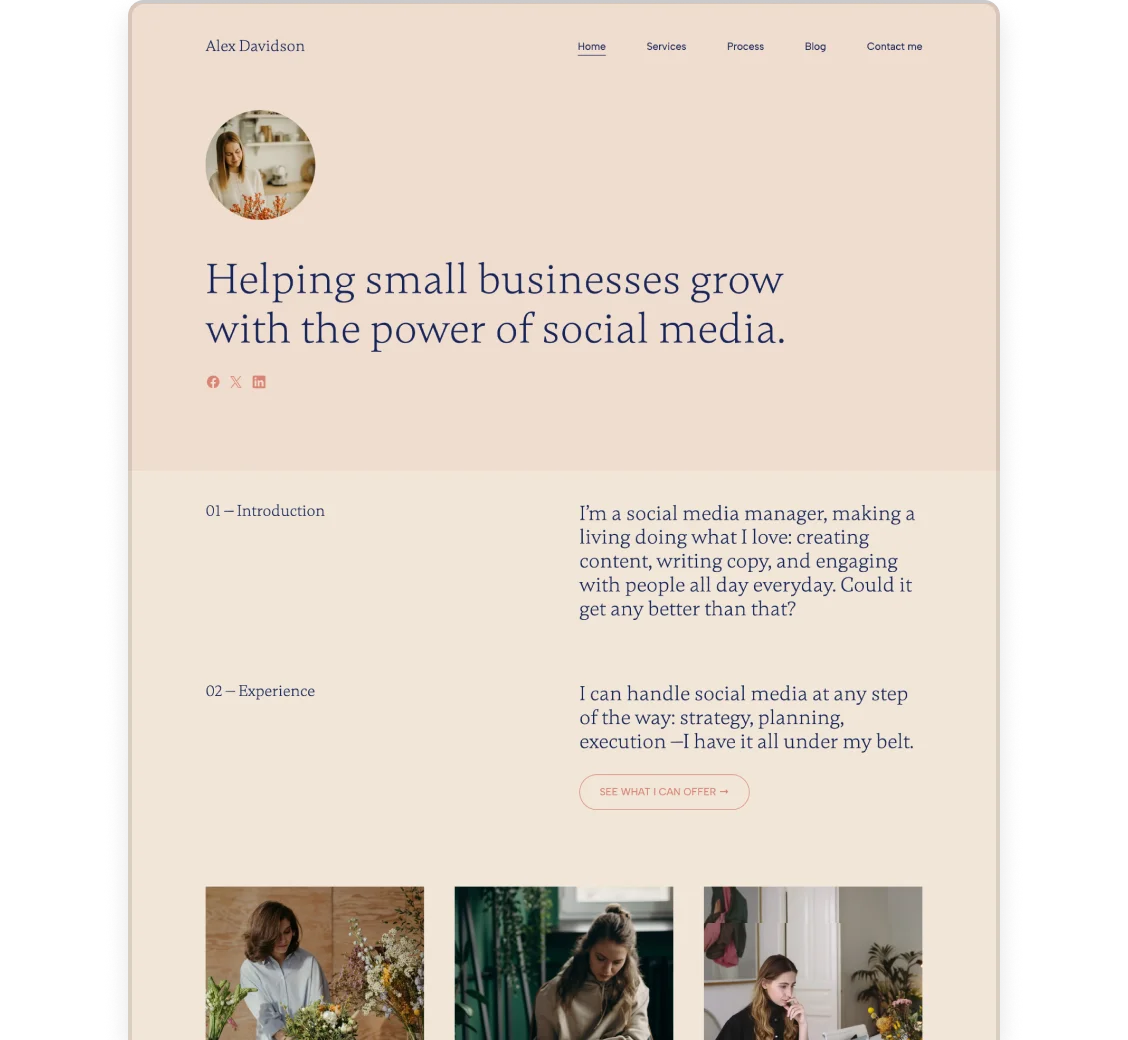
Want to get even more out of your portfolio? You don’t have to stop there then. You can also…
- Figure out your brand personality with Copyfolio's branding assistant, Brandi. Chat with her, answer a few questions, and nail all the details.
- Optimize your SEO settings and help even more people find your portfolio
- Write a blog to showcase your writing skills and share your thoughts
- Build an even more convincing portfolio by adding your resume, about or services page, using convenient page presets
- Keep an eye on your visitor statistics with built-in site insights to see which page or project is the most popular and make changes based on that
- Or connect Google Analytics to drive even deeper into your visitor data
Sign up and create your copywriting portfolio today!