What HR Actually Looks For in Marketing Applications (Avoid These Red Flags)

When you're in the middle of job applications, wouldn't it be nice to pick someone's brain who's actually hiring marketers right now? Well, if that's you, then you are in luck, because we sat down with our parent company's HR manager, Bia, to ask her about what recruiters and hiring managers actually want to see in marketing applications.
We’re talking red flags, marketing portfolios, and lots of helpful tips from someone who’s hired dozens of marketers and has reviewed thousands of portfolios. Scroll for the insights, or click to watch the whole interview here:
What you should know about marketing applications in general
A few things to keep in mind, so you don’t lose your marbles in the process.
It’s a marathon, not a sprint
Even when everything goes smoothly, a “hiring round” can easily take 1-2 months for companies. There are usually 3-5 steps involved; they need to wait for enough applications to come in.
So if you start looking and don’t land a job within a week or two, don’t worry, there’s nothing wrong. It’s just the way the system works.
Interviews go both ways
It’s normal to be nervous before a job interview, but we have a tip to help with the nerves: keep in mind that it’s not only the company interviewing you, but you’re also interviewing them. HR wants candidates to ask questions to make sure it’s a mutual fit.
Why? Because they want colleagues who are not only capable and skilled, but also excited to be there.
Being a team fit is crucial
Continuing along the lines, remember that the final decision is not made in a vacuum. Yes, your skills and experience are important, but the prospective colleagues and team leads who might help HR in the hiring process are there to select their future teammate.
They’re looking for a good team fit, so good impressions and vibes matter. Try to be yourself and show your personality, as that (and your personal brand, basically) might be what sets you apart from the other promising candidates.
The marketing portfolio do’s and don’ts
In most marketing job applications, you’ll be asked to send in your CV and marketing portfolio. Or even if not, it might be very worth it to do so anyway.
Sending a portfolio is a major advantage
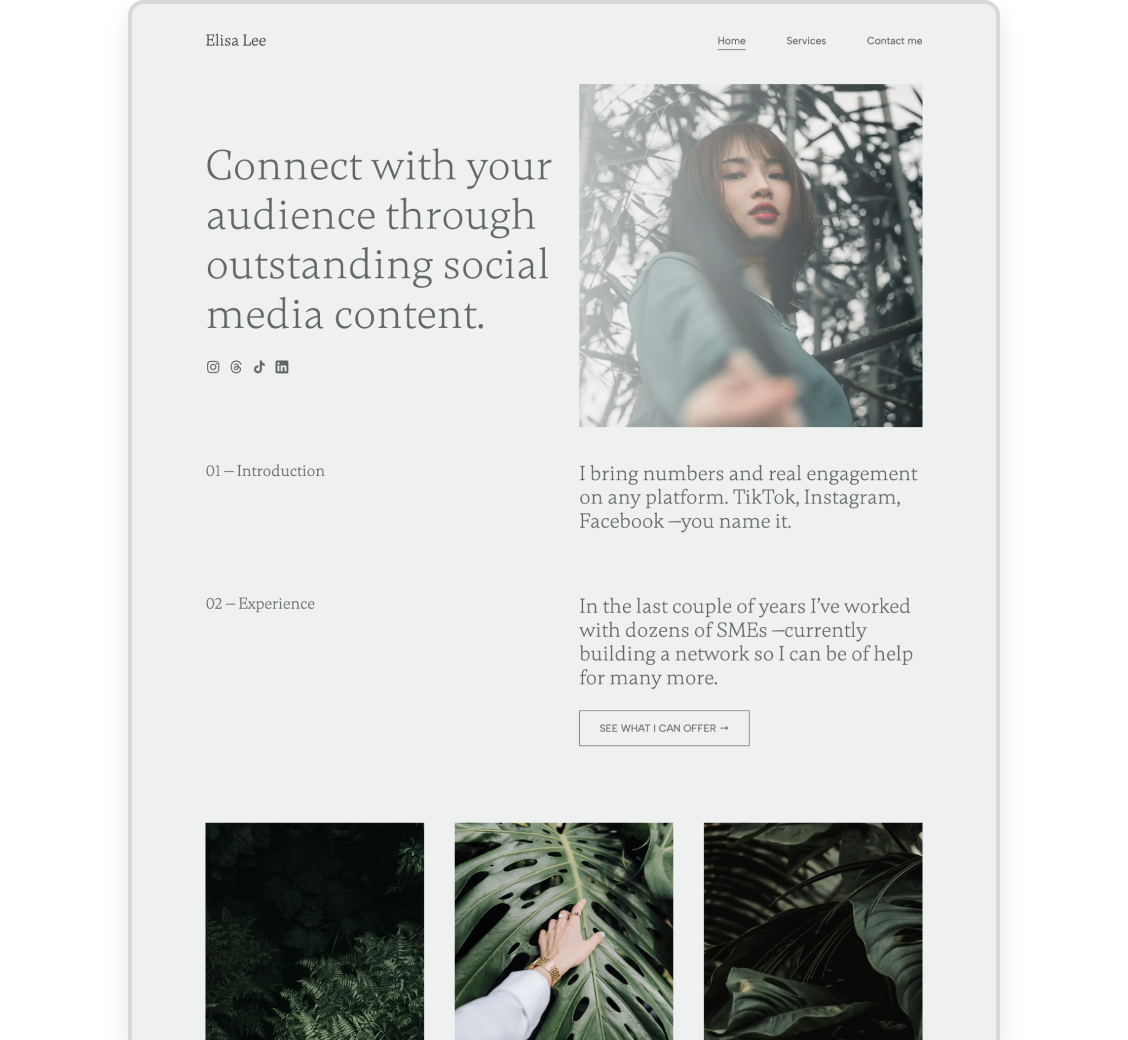
Especially for non-technical marketing roles like a social media marketer position, a portfolio is the best way to show your work and prove your skills. And when not everyone sends one in, a marketing portfolio can really move you to the top of the potential hires’ list.
Execution is everything
Don’t just submit any hastily thrown together portfolio, though. Sending a poorly executed one is worse than not sending one at all. Inconsistent design, typos, hard-to-navigate pages all make a bad impression.
Customize your portfolio to the role
On a similar note, make sure your portfolio matches the position you’re applying for. If you have a graphic design portfolio sitting in a folder from your previous job, don’t send it as it is for a marketing position.
You can include elements of graphic design or other skillsets, but don’t center your whole portfolio around them, as it’ll be a turn-off for the hiring manager.
If you’re applying for a content marketing position, your portfolio should have projects that support that. Aiming for a social media marketing role? Showcase your social media strategy, videos you created… and yes, in this case you could include a few graphic design samples too.
Quality over quantity, always
Speaking of projects, keep in mind that hiring teams are usually pretty busy and don’t have all the time in the world. The “golden number” of projects they’re most likely to actually check is 3. So make sure you put your best foot forward by adding your absolute best pieces.
I think my advice to marketers would be: if you don't feel very sure about that project, don't put it in the portfolio.
You can always add more projects, knowing they might not be clicked on. But just in case they are, they should all be ones that you’re proud of.
What HR actually looks for
You have the questions and the projects. What else? Here’s what Bia mentioned that they specifically look for in marketer candidates.
A skillset matching the position
Similarly to getting a relevant portfolio, HR wants to see skills and experience matching the specific position they’re hiring for.
If you’re a marketer, but from a totally different side of marketing, you might only make it to the maybe pile. But if you actually have experience with the tools and processes they’ll need this new colleague to use and do? On to the next step you go.
Clarity mixed with creativity
Our HR manager also emphasized, how making a memorable impression and being creative in how they present themselves is especially important for marketers (compared to other positions). Which makes sense, as you’re basically marketing yourself during a job interview.
At the same time, you need to stay clear about what it is that you do, so it’s a fine balancing act, for sure.
Passion and a backstory
Recruiters and hiring managers also love to see enthusiasm, so don’t be afraid to let your passion shine through. And if you’re a career changer, or concerned about the seniority level of the job, open up and share your backstory, as that can help your case and yet again differentiate you from other applicants too.

Instant red flags to avoid in your marketing application
There are some things that’ll immediately make you land in the reject pile. These might differ from recruiter to recruiter, but here are the ones our HR manager highlighted.
AI slop in your application
Submitting answers to initial questions or a take-home assignment that scream AI will get you the quickest rejection possible. Using AI is not the problem. Blatantly copy-pasting, and relying on it too much is. Companies are hiring marketers for the unique voice and presentation skills, so when they see an LLM there instead… You can imagine the response.
Having a bad attitude
This should go without saying, but since it sometimes still happens, let us just say it again: don’t go into an interview with a horrible attitude. You’re not going to get the job, no matter how good of a marketer you are. Being rude, acting bored, or seeming like you don’t even want to be there will guarantee your interviewers won’t want to work with you.
Not knowing the company or what you’re interviewing for
Another bad look is having no clue what you’e interviewing for or admitting you don’t even know what the company does. While HR managers know the job market is tough right now and you might be interviewing for many positions around the same time, it still says a lot about how dedicated and organized you are.
The ultimate marketing application prep tip from our HR manager
If you are indeed in the middle of applying for a dozen marketing jobs at the same time, our HR manager, Bia, shared a life-saving tip for you.
Essentially, you need to keep an interview tracker. It can be an excel sheet, Notion database, or however you like tracking things. Even if you don’t add every single application, at least list the ones where you got to the interview stage.
You can include some visual aids like the companies’ logos to help you quickly remember, and find one genuine hook for each. You can just write down a sentence about what the company does, or one little, specific detail that caught your eye on their website or in the materials they sent you. The more specific, and the more you can connect it to your own life, story, or experience, the better.
Make sure to watch the interview if you have time, and don’t forget: you can always browse our blog if you have questions about your marketing career path, looking for some portfolio inspiration, or need help with your personal brand, you can always browse the Copyfolio blog.